Archive for the ‘Nail Fungus Treatment’ Category
Myxiod Cyst or Digital Mucous
Myxiod Cyst or Digital Mucous
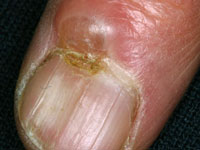 A Myoxid cyst develops because of alterations in the tissue on the tip of the toe. A cyst is a shiny, smooth bump. It is soft and rubbery and looks sort of transparent. When they develop, it is usually towards the end of fingers or toes. Usually they are about 1/5-3/5 inch wide and form in a circular or ovoid shape. Digital Mucous occurs when these cysts burst and emit a thick fluid, whitish or yellowish in color. These cysts occur more commonly in women and in people 45 years or older.
What Causes This?
Myxoid cysts usually develop where a recent minor trauma or an old injury have occurred. Friction (similar to a blister) is also a culprit. Submerging your hands in water for a long time can make these cysts occur as your body soaks up the liquid and it collects as a bump, potentially developing a bit of an infection.
How Do I Treat It?
The nice thing about this particular disease is that there is no urgency in seeking treatment until it becomes painful or begins to throb. Sometimes this disease is self- curing and it just goes away, it can also be eliminated by pressing on or squeezing the cyst. Medically, the popular way to remove these cysts is cryotherapy or freezing.
- Cryotherapy is the process of freezing an area of skin to kill off infection. The most commonly used freezing chemicals are liquid nitrogen, carbon dioxde snow, propane, and Dymethy ether. Of these, liquid nitrogen us most used. This has become a very safe, fast and effective way of removing many kinds of unwanted cysts and warts.
- Liquid Nitrogen (NO2) Treatment – A cryoprobe, cryospray or coated cotton tipped applicator is applied to the affected area. This freezes the cyst and allows the skin to heal.
- CO2 Snow Treatment – Carbon Dioxide Cryotherapy uses a tube of icy carbon dioxide flurry, sprayed directly onto the affected skin
- DMEP treatment – Using a foam applicator, the chemical is applied directly to the affected area for between 20 and 50 seconds, depending on the size and place on the body.
Myxoid cysts can be removed surgically but this increases the possibility that they will reoccur. If you choose this method, your doctor will examine the cyst with an ultra-sound or x-ray. It is also likely that an MRI will be scheduled.
If the cyst is not particularly painful, your doctor can insert a needle into the cyst and withdraw the fluid that way, leaving the skin to heal.
Welcome To NailsFungus.org
Welcome to the Blog Section of NailsFungus.org

In this section you will find articles and videos on nail fungus and nail fungus treatments. Feel free to search for a subject concerning you or just browse around. We have amassed the largest informational database on nail fungus online and are here to help…
Are There Any Over the Counter Nail Fungus Treatments That Actually Prove Effective?
Are There Any Over the Counter Nail Fungus
Treatments That Actually Prove Effective?
As microorganisms go, fungi seem to be one of the strongest strains. It is much harder to kill them than bacteria and viruses. Dermatophyte, molds and yeasts can invade your nails and burrow deep into the nail itself, creating quite the armor of keratin for this marauding nail fungus. This makes treating onychomycoses much more difficult as even powerful antimycotic medications are not always entirely effective. So this begs the question of whether any of the available over-the-counter nail fungus treatments are effective and worth your time and money.
It is an unfortunate but true fact that very few topical treatments, whether prescription or over-the-counter, effectively treat and cure nail fungus infections.
Amorolfine
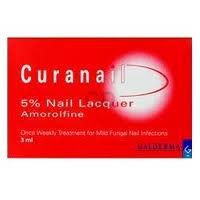 A very popular over-the-counter topical onychomycosis drug that has been proven to be effective in clinical trials is amorolfine. This topical drug is available without a prescription in a handful of countries such as the United Kingdom and New Zealand. It’s marketing name is Loceryl. Amorolfine comes as a nail lacquer and is painted on the nail like a polish. This leaves the medicine free to penetrate the nail after it has dried and allows it to work over time, just as the nail fungus does. It is active up to a week, then may need to be re-applied.
Amorolfine works by inhibiting the cell membrane of the fungus. It is only effective on distal (or lateral) subungual onychomycosis. This leaves out proximal subungual onychomycosis and superficial white onychomycosis. Knowing which type of onychomycosis you have contracted is important if you wish to choose this over-the-counter method.
Amorolfine is not available in the United States as an over-the-counter remedy, which is inconsistent with other countries’ policies. There are a few side effects but they are mild and rarely occur with proper usage. A burning sensation while applying the lacquer for the first time has been reported, but it goes away quickly. As online pharmacies become more popular, it may be possible to obtain amorolfine in the U.S. via these services who sell it over-the-counter. However cost may be an issue as Loceryl (the commercial name for amorolfine) can cost around $100.00 – $150.00 for a single 5 ml tube.
There are several over-the-counter anti-fungals that are very successful at treating skin fungus problems but are not successful nail fungus treatments.
Lamisil is a decent oral onychomycosis treatment when it is prescribed in tablet form. However it also has an over-the-counter form of a topical cream, which has not proven effective at treating nail fungus.
Lotrimin (also known as clotrimazole) is very effective at treating athelete’s foot and jock itch but has not tested or been shown as a good nail fungus treatment.
Tolnaftate (or Tinactin) is the third over-the-counter product that although it is an excellent skin fungus treatment, does little or nothing for nail fungus.
A more promising solution in terms of over-the-counter medications is an anti-fungal nail liquid of undecylenic acid. Two different papers, one published in 1965 and the other published in 2008 examined the use of undecylenic acid in treating onychomycosis. The 2008 study shows a positive effect, however in these tests the undecylenic acid was combined with cyanoacylate and hydroquinone. There is no definite proof of undecylenic acid being effective on its own.
In the realm of alternative medicine, Tea Tree Oil, (Melaleuca alternifolia) has been shown to have some positive effect on nail fungus. As it is a naturally occurring fungicide and insect repellant, applying a 100% concentration of the oil to the infected area has been reported by small studies to be able to cure 20% of the cases followed. In two-thirds of the patients followed, using Tea Tree Oil caused an improvement in the appearance of the nail fungus infection. Another study compared the twice daily application of 100% Tea Tree Oil and a 1% solution of clotrimazole. The Tea Tree Oil appeared to be slightly more effective at clearing up the nail fungus problem.
Topical products or removing the nail
All of these topical products are applied and have been tested in cases where there has not been surgery to remove the nail before applying the product. It is possible that removing the nail before treatment, via surgical, mechanical or chemical method, may improve the chances of an over-the-counter nail treatment clearing up a nail fungus as this allows the medicine to get directly to the source of the infection. If you are considering surgery or any other form of nail removal as part of your onychomycosis treatment, please ask your surgeon or doctor for information about follow up nail fungus treatments.
If you do not wish to go the surgery route to solve your onychomycosis issues but do wish to cure your nail fungus, the best chance of success still lies with taking oral antifungal agents, which are currently only available with a doctor’s prescription.
Prescription Treatments for Onychomycosis – A Doctor’s Recommendations
Prescription Treatments for Onychomycosis
A Doctor’s Recommendations
 Where once onychomycosis was considered solely a cosmetic problem, doctors are treating it with greater concern. Nail fungus is unattractive, yes, but it also affects the infected person’s willingness to interact with others, especially in situations where exposing the infected nail or having other people come into contact with it may make the sufferer uncomfortable.
Beyond the psychological and social repercussions associated with onychomycosis, the basic function of the nail is disrupted. The point of having the nail sheath (the hard part of the nail) is to act as an armor for the soft tissue beneath and to assist in how we sense and interpret the world. A foot that has an infected nail or nails may interfere with normal sensation and even the ability to walk. Add to this the possibility of a nail fungal infection allowing for what is referred to as a ‘superinfection’, the chance that other bacteria and viruses could layer themselves on top of the fungal infection and cause further harm, and it is time to fix the problem.
These are the reasons behind the medical communities more aggressive treatment of onychomycosis. On the patient side of the equation, more people are requesting treatment and mentioning the problem to their doctors earlier to nip it in the bud.
There are two basic categories of treatment for onychomycosis. Oral (by mouth) and topical (applied directly to the infected area) Which treatment your doctor chooses will depend on a variety of factors. If the lunula (white area at the base of your fingernail) is affected by either distal subungual onychomycosis or proximal subungual onychomycosis then the oral medical prescription is the method of eradication. How the patient feels about the entire process is taken into account as well. Therefore it is not uncommon to use both an oral and a topical medication in conjunction. Working the infection from both sides of the body (in and out) can be a very effective treatment.
Choosing the oral prescription medication treatment is not to be considered lightly. One of the main drawbacks of this method of fungus eradication is that all of the antimycotic (antifungal) medications available for the treatment of onychomycosis have the potential to cause liver damage. It is imperative that your doctor test your liver function before beginning a course of these drugs and it is likely that your doctor will continue to monitor your liver during the treatment. If a patient has any history of or current liver problems, an oral medication should not be taken. The patient should monitor themselves as well, telling their doctor if they experience upper abdominal pain, malaise, fatigue, or if they notice jaundice (yellowing skin or yellowing of the eyes), pale colored stools or particularly dark urine.
In the past, Griseofulvin was the only available oral prescription medication to treat onychomycosis. It did work, but not terribly well and usually came with a passel of side effects, particularly when moderate to high doses were recommended. Griseofulvin treatment also took a long time and it was common for the infection to reoccur after the treatment stopped. Fortunately a variety of options have been created since then.
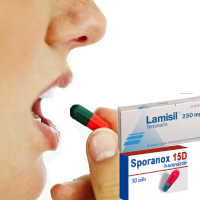
Terbinafine, more commonly known as Lamisil is very effective at fighting onychomycosis caused by dermatophytes, which is the most common cause of the disease. Terbinafine is prescribed as a 250 mg pill taken once a day for six weeks for fingernail infections and for twelve weeks if treating toenails. In some cases, pulse therapy (taking a drug for a certain period of time, then giving the body time off) has been effective. A complete blood count and liver panel should be taken before this treatment is started as well as four weeks into the therapy.
Itroconazole also known as Sporanox is also commonly administered in pulse dosing. The usual treatment schedule is 200 mg by mouth once a day for one week per month over the course of three months. Itraconazole can have negative reactions with several other forms of medication so telling your doctor exactly what you are currently taking before starting treatment is a medical necessity. A liver panel should be taken before this treatment is started and four weeks into the therapy.
Fluconazole, otherwise known as Diflucan is taken once a week in either 150 or 300 mg doses until the symptoms are gone. The treatment may last up to nine months before positive results are seen. Again, this drug may have negative interactions with other medications so tell your doctor what you are currently taking to avoid this. No blood tests are required when taking fluconazole but your doctor may order them anyway.
It is most common to use topical onychomycosis prescriptions in cases that are caught early on and therefore still mild, and in conjunction with an oral medical prescription. An incredibly effective topical prescription is Ciclopirox, commercially known as Penlac. This is an 8% topical solution that is applied to the infected area once a day. While it is a safer delivery method than oral antimycotics, when used alone it only achieved a 5% success rate.
When all other methods have failed, and/or in severe cases of onychomycosis, surgery becomes an options. There are three different methods of surgical nail removal: mechanical, chemical or surgical nail avulsion (removal). The nail can be mechanically or surgically avulsed (torn off) which is done after numbing the area with a local anesthetic as it can be quite painful. This is most common when the nail has already pulled away from the nail bed. A concentrated solution of 50% urea can be used to both eradicate the infection and soften the nail for removal and can be a fairly painless process. Once the nail has been removed, keeping the area clean and dry to prevent further or re-infection is necessary.
References
Ciclopirox (Penlac) prescribing information
Fluconazole (Diflucan) prescribing information
Itraconazole (Sporanox) prescribing information
Terbinafine (Lamisil) prescribing information
Acrylic Nail Fungus Infections
Acrylic Nail Fungus Infections
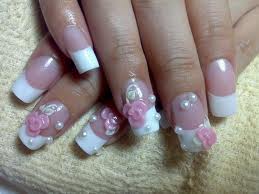 Many people choose to have acrylic nails applied to their hands. These are usually much stronger than the normal human nail and for those whose nails are very weak, it is an excellent solution to their problem of constant breakage or unattractiveness.
However there is the potential for a fungus to get in between the acrylic nail and the natural nail and find a great place to grow. Most salons practice excellent hygiene. However some don’t. Those are probable breeding and propagating grounds for the fungus. If you have your nails done, make sure you go to a salon that sterilizes their equipment between customers and uses antibacterial products.
Sometimes there is just nothing to be done. A fungus may just invade, no matter how hard you and your salon try. This can happen if a fungus has already attached itself to your nail, and you have an acrylic one put over the top, or if an item isn’t sterilized and it passes the fungus from one infected person onto you. A trained nail specialist is supposed to be able to recognize the symptoms of nail fungus infection and will advise against putting the acrylic nail over the infected nail. This is good, as covering an infected nail just makes the infection worse. Allowing the fungus to have a good growing environment is the worst thing you can do, and having the extra protection of the acrylic nail as well as it trapping warmth and humidity creates that positive environment. Your nail specialist will advise you on treatment options or recommend that you go see a doctor.
What if I Do Become Infected?
There are some very simple treatment options if you do get an infection underneath an acrylic nail.
- Using an over-the-counter product such as Lamisil cream to rub on the affected nail and surrounding skin every day. Apply to the top and underneath the nail
- Tea Tree Oil, which is both an antiseptic and an antifungal can also be rubbed on the afflicted nail and surrounding skin every day. Apply to the top and underneath the nail.
- Cleaning the dirt and gunk out from underneath the nail is another good method as it removes possible spores and possible food sources. Wiping the cleaned area down with rubbing alcohol afterward will help to kill off the fungi already existing.
- A last resort is to go to your doctor and discuss the prescription medicine options that are available. Many of these come with serious side effects, such as potential damage to the liver, so make sure this is something you are healthy enough to do and willing to see through to the end.
 Posted in Nail Fungus, Nail Fungus Infection, Nail Fungus Treatment |
  Tags: acrylic nail, acrylic nails, fungus infection, fungus infections, nail fungus